When Canadian homeowners start comparing motorized blinds, the first question is rarely about fabric or lift systems. It’s whether the shades will actually work with whatever smart home system is already running in the house — and smart blinds compatibility is where more shoppers get stuck than on any spec sheet, because the industry uses three different words (protocol, hub, ecosystem) to describe what is really one practical question: will this shade open when you ask it to?
A good electrician would walk a homeowner through what actually connects to what, what changed with the Matter standard in 2026, which brands support it today versus which ones are still only promising it, and what a Canadian household running motorized blinds should check before buying.
What Smart Blinds Compatibility Actually Means
Two different layers decide whether a shade motor will respond to a voice command or an app tap. The first is the wireless protocol — Wi-Fi, Zigbee, Z-Wave, Bluetooth, or the newer Thread — which is simply the radio language the motor speaks. The second is the ecosystem — Amazon Alexa, Google Home, Apple Home, or Samsung SmartThings — the app and voice assistant a household has already standardized on. A motor can support a protocol perfectly and still be useless in a given house if nothing bridges it to that household’s ecosystem.
Matter exists to close that gap. It’s a shared application layer that several ecosystems agreed to support, so a Matter-certified device pairs once and shows up in Alexa, Google Home, Apple Home, and SmartThings at the same time, instead of needing a separate skill or app for each one.
Three Ways Blinds Connect to a Smart Home
Every motorized shade on the market today reaches a phone or a voice assistant through one of three paths.
| Connection type | What it needs | Where it fits |
|---|---|---|
| Direct Wi-Fi | Home Wi-Fi network, manufacturer app | Simplest setup; usually needs the maker’s own app, and voice control depends on whether that app has an Alexa/Google skill |
| Hub or bridge | A dedicated bridge box (often Zigbee or proprietary radio) plugged into the router | Common with cellular and roller motor lines; the bridge is what actually talks to Alexa or Google Home, not the motor itself |
| Matter over Thread or Wi-Fi | A Thread border router (or Wi-Fi, for Matter-over-Wi-Fi devices) plus one-time pairing | Newest path; works across ecosystems without separate skills once paired |
Households upgrading from manual to motorized blinds usually meet the first two paths, since most product lines sold in Canada today still ship with a manufacturer app and bridge rather than native Matter. That’s changing, but not evenly across every brand or product line.
Matter and Thread in 2026: What Actually Changed This Year
Window coverings aren’t new to the Matter specification — the “Window Covering” device cluster, which handles lift position, tilt, and open/close state, has been part of Matter since version 1.0. It already covers roller shades, blinds, shutters, Venetian and pleated blinds, vertical blinds, curtains, and awnings, so the category was never the holdup. Adoption by shade manufacturers was.
What moved in 2026 was the infrastructure underneath it. Thread 1.4 became a mandatory requirement for any new Thread Border Router seeking certification as of January 1, 2026, which pushed hub makers to tighten radio range and reliability before shipping new hardware. Matter’s own point releases followed the same pattern: version 1.4 added energy-management reporting and Thread stability fixes, and 1.4.2 tightened the security requirements border routers have to meet. None of that is visible to someone opening blinds with a voice command, but it’s the reason a Matter setup built in 2026 behaves more predictably than one built two years earlier.
Which Motorized Blinds Actually Support Matter Right Now
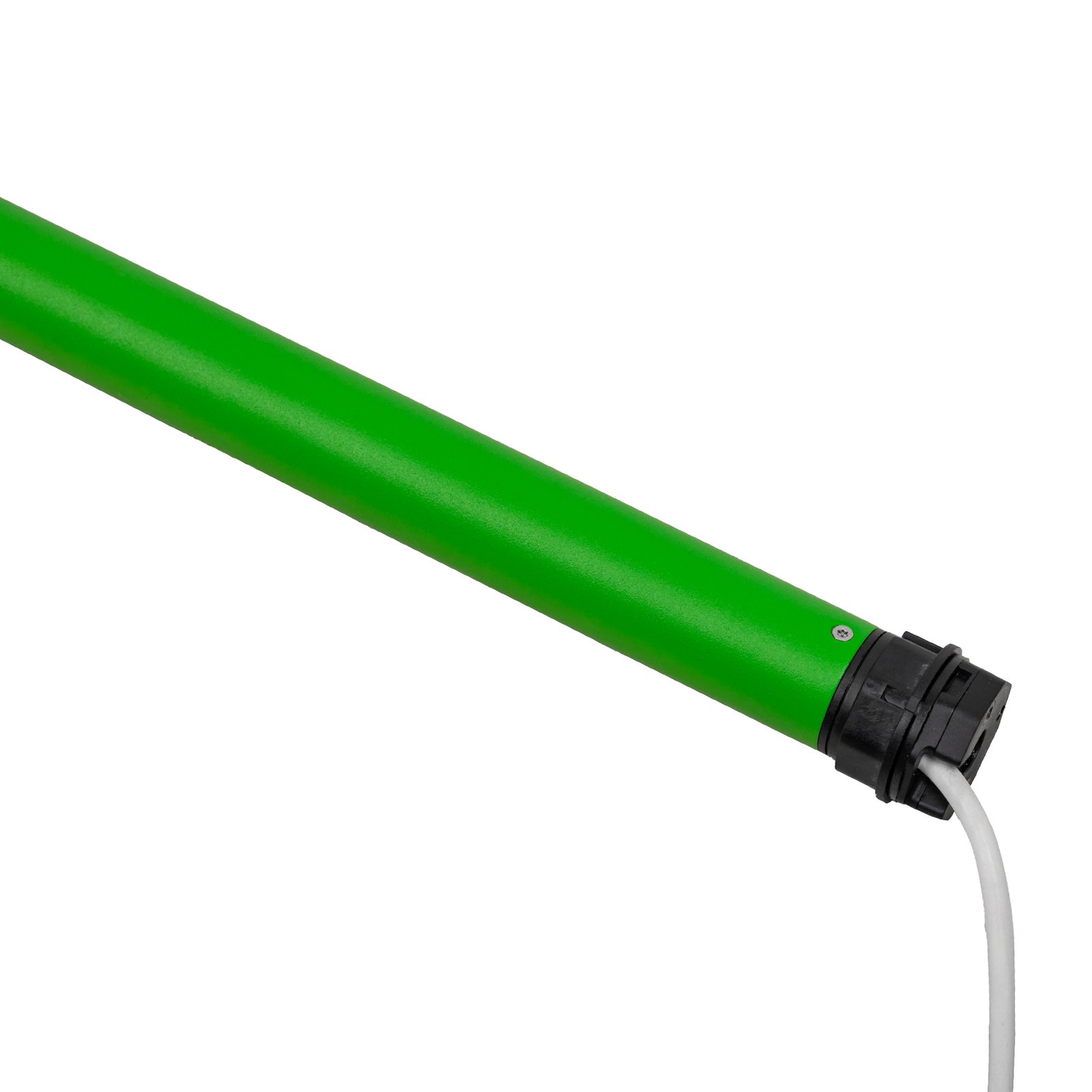
Support is uneven, and that unevenness is the detail most guides to smart blinds compatibility skip over. Eve Systems sells a Matter-native blinds collection built around its own tubular motors. Coulisse, based in the Netherlands, brought its MotionBlind retrofit motors onto Matter without requiring a full shade replacement. Texas-based SmartWings and Zemismart both ship Wi-Fi motors with Matter support, and Germany’s Schoenberger Group added it to its Jarolift and Julius Mayer lines through a bridge device. For households with older Zigbee-based blind motors already installed, Aqara and Ubisys both sell Zigbee-to-Matter bridges that add cross-ecosystem control without swapping the motor.
Somfy and Warema — two of the largest names in blind and shade motors globally — have shown Matter prototypes but had not shipped a certified consumer product as of this writing. That gap matters at the point of sale: a retailer or product page describing a motor as “Matter-ready” rather than “Matter-certified” is pointing to a roadmap item, and the difference is worth asking about directly before paying for it.
Zenith Shade’s own motorized roller, zebra, and cellular systems are built to work with Alexa, Google Home, Apple Home, and SmartThings out of the box, with Matter support expanding as the underlying motor hardware catches up across the industry — worth confirming directly against the ecosystem a specific household already runs when requesting a quote.
Matter isn’t the only protocol worth checking, either. Z-Wave’s 800 series brought real gains in radio range and battery efficiency over earlier generations, which matters more than a spec sheet suggests on a large rural property or an older Ottawa home with plaster walls that eat Wi-Fi signal — SmartWings, for one, was among the first shade makers to build on Z-Wave 800 rather than waiting for Matter alone. For a basement window or a well-covered patio door where Wi-Fi reception is already weak, some manufacturers now offer Power-over-Ethernet motor options that skip wireless radio entirely and run over the same cable carrying power, trading installation flexibility for a connection that a router’s dead zone can’t touch.
Alexa, Google Home, and Apple HomeKit: How Each One Actually Runs Your Blinds
Alexa handles blinds through either a manufacturer skill or, increasingly, direct Matter pairing. A command like “Alexa, set the bedroom blinds to 50 percent” works once the shade is exposed as a device, and routines can tie it to a sunset trigger or a morning alarm without any extra hardware beyond what’s already required for setup.
Google Home works the same way in practice — voice or app-based percentage control, plus automations based on time of day, sunrise and sunset, or a geofence trigger when someone leaves the house.
Apple Home is the pickiest of the three. Because Apple’s Matter implementation runs over Thread rather than Wi-Fi, a household needs a Thread border router in the home already — a HomePod mini or an Apple TV 4K, both of which double as border routers automatically once set up. Skip that step and a Matter-only shade motor simply won’t show up in the Home app, regardless of how correctly everything else was installed.
One detail that surprises first-time buyers: battery-powered motors, which are common on cellular and zebra shades to avoid running wire to every window, typically run for four to six months per charge under normal daily use. A retailer quoting a specific motor should be able to confirm that figure directly, since it varies by motor size and how often the shade cycles per day.
Samsung’s SmartThings sits slightly apart from the other three. It was one of the earliest hubs to support Zigbee, Z-Wave, and Matter under one roof, which makes it a common landing spot for households that accumulated devices across several protocols before Matter existed — a Zigbee blind motor, a Z-Wave door lock, and a Matter light switch can all live in the same SmartThings app without a separate bridge for each one, provided the SmartThings hub hardware itself is new enough to include Matter support.
Retrofitting Old Blinds vs. Buying New Motorized Ones
Retrofit motors like Coulisse’s MotionBlind or SmartWings’ add-on units clip onto an existing shade tube, which keeps the fabric a household already owns while adding app and voice control. It’s the cheaper path, but it inherits whatever clearance and mounting constraints the original blind was built with — a low-profile window recess that barely fit a manual roller blind won’t necessarily have room for a retrofit motor tube without re-measuring first.
Buying new motorized zebra or cellular shades sidesteps that problem, since the motor and headrail are sized together from the start. It also settles a safety question in passing: Canada’s corded window covering regulations exist because standard cords present a strangulation hazard to young children, and a household replacing corded blinds with new motorized, cordless-by-design shades clears that requirement without needing a separate cord-safety retrofit. We’ve covered the regulation itself in more detail in our cordless blinds safety guide; Health Canada’s own summary is available directly from the Government of Canada.
Either way, accurate window measurements decide whether a motor fits cleanly or gets forced into a recess it wasn’t sized for — our measuring guide covers the depth and clearance numbers a motorized headrail needs beyond what a manual blind requires.
A Before-You-Buy Checklist for Canadian Homes
Start with what’s already installed, not with what sounds most advanced. A homeowner in a Kanata townhouse who already runs Google Home for the thermostat and the front door lock doesn’t need Matter — Google Home already talks to most manufacturer apps directly through existing integrations, and adding a Matter bridge on top of a setup that already works usually introduces a new point of failure rather than removing one.
- Confirm which ecosystem the household actually uses daily — not which one sounds the most future-proof.
- Ask whether a quoted motor is Matter-certified today or only “Matter-ready,” since those mean different things at delivery.
- Check battery life and charging method for battery motors versus wired power for larger or frequently used windows.
- Re-measure window depth and mounting clearance before assuming a retrofit motor will fit — don’t rely on the original blind’s spec sheet.
A household starting from scratch, with no smart home system installed yet, is in the opposite position: buying Matter-certified shades now avoids re-pairing everything later if the household later switches from, say, Alexa to Apple Home. That flexibility has a cost — Matter-certified product lines are still a smaller slice of what’s available in Canada than direct-Wi-Fi or hub-based alternatives, so the choice is real, not automatic.
A third case comes up often enough to name directly: a household that already runs Zigbee for something else — Philips Hue lighting is the common example — doesn’t need to buy a second, unrelated bridge just to add blinds. An Aqara or Ubisys Zigbee-to-Matter adapter can put a Zigbee-based blind motor on the same radio network the lighting already uses, then expose it to Alexa or Google Home through Matter instead of installing a third manufacturer app purely to open and close the shades.
Frequently Asked Questions
Do smart blinds need a separate hub?
Some do and some don’t. Direct Wi-Fi motors connect straight to the router and skip a hub entirely, while Zigbee-based motor lines need a bridge to reach Alexa or Google Home. Matter devices need either a Thread border router or a Wi-Fi connection, depending on which version of Matter the motor supports.
Is Matter better than buying directly into one ecosystem?
Not automatically. Matter’s advantage is flexibility if the household’s ecosystem changes later, but a household firmly committed to one system today often gets more reliable day-to-day control from that system’s native integration than from an early-generation Matter bridge.
Can I add voice control to blinds I already own?
Usually, yes, through a retrofit motor from a brand like Coulisse or SmartWings, provided there’s enough clearance in the window recess for the added motor tube. It’s worth re-measuring rather than assuming the original blind’s dimensions leave enough room.
What happens to motorized blinds during a Wi-Fi or internet outage?
Most motors keep working from a physical remote or a wall switch even when the network is down, since the radio connection controls the smart features, not basic movement. Voice commands and app control are what go offline; the blinds themselves generally don’t get stuck.
Does Zenith Shade’s motorization work with Alexa, Google Home, and Apple Home?
Yes — our motorized roller, zebra, and cellular systems are built for smart blinds compatibility with Alexa, Google Home, Apple Home, and SmartThings, and that’s confirmed against the exact ecosystem in use during a free in-home consultation.
Figuring out which connection path actually fits a specific home is easier with someone measuring the windows and asking what’s already running the rest of the house. Zenith Shade offers a free in-home consultation across Ottawa, with French-language service available in Montréal — request a quote or see our full range of consultation services to get a straight answer on what will and won’t talk to your smart home.