For homeowners in Ottawa and Montréal, the custom vs ready-made blinds decision usually starts at a big-box shelf or a search bar, rather than a design catalogue. One path gets a set of blinds home within the hour. The other means a measurement appointment, a week or two of waiting, and a delivery cut to the exact window. The price gap between the two is real, but it isn’t the only number that matters — fit, mechanism life, and warranty terms shift just as much once you know what’s actually different inside each option.
The confusion is understandable. A quick search turns up ready-made vinyl blinds for well under $50, sitting one aisle over from custom orders that run several times that per window. What’s less visible is why: different manufacturing tolerances, different mechanisms, and different expectations for how many years the product needs to hold up. Canada’s blind and shade manufacturing industry is on track to generate about $409.3 million in revenue in 2026, spread across roughly 326 manufacturers according to IBISWorld — a market with genuinely different tiers of product, not just different price tags on the same thing.
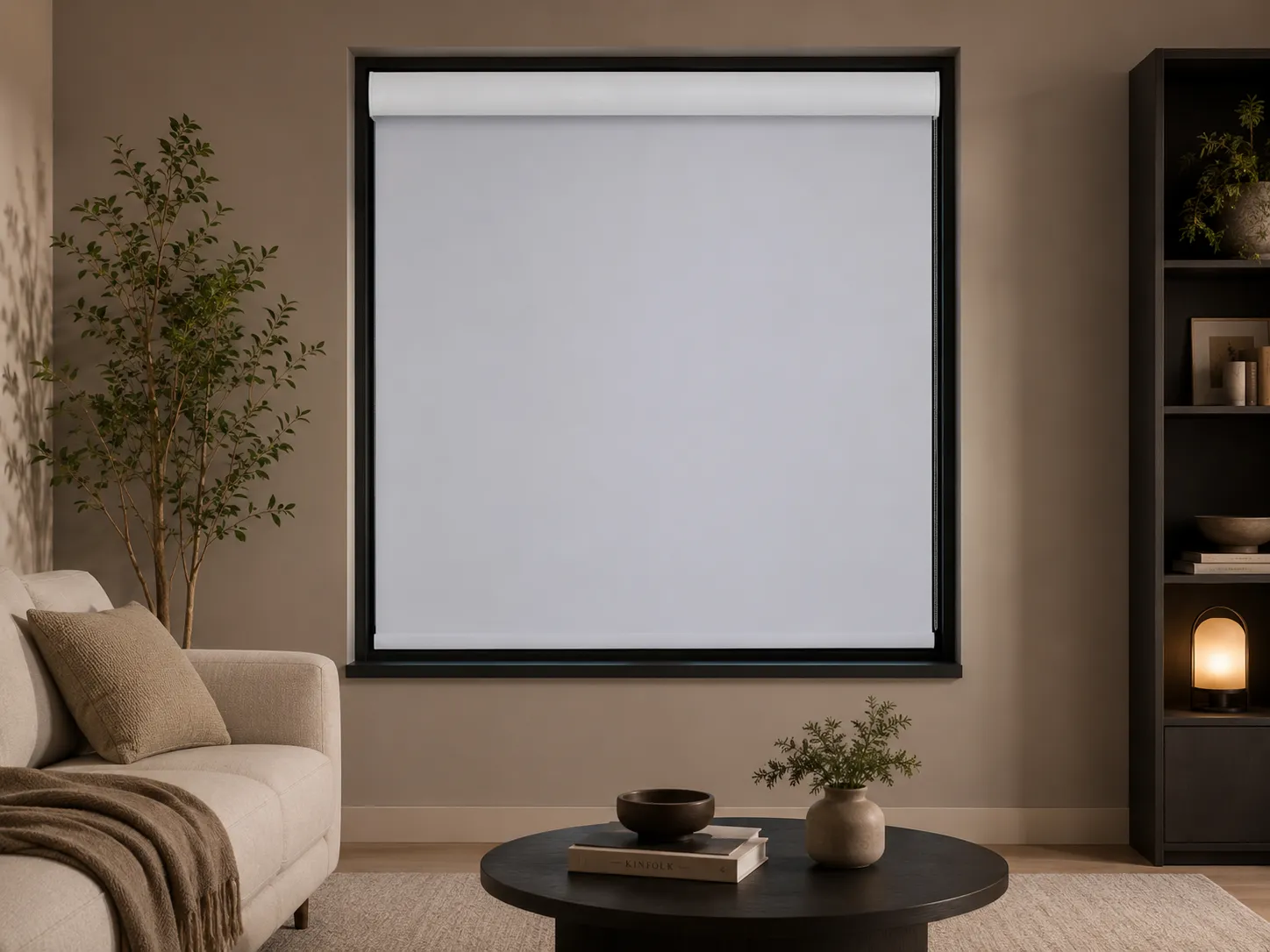
Ready-Made and Custom Are Built Differently, Start to Finish
Ready-made blinds are manufactured in bulk, in a fixed set of stock widths — typically 23, 27, 30, 36, and sometimes 48 or 60 inches — then packaged and shipped to store shelves or a warehouse before anyone has a specific window in mind. Custom blinds are cut to order after a professional measures the actual window opening, which is why a custom order takes one to two weeks rather than a same-day pickup.
Zenith Shade’s own roller blinds, zebra blinds, and cellular blinds all follow the custom path: fabric ordered and cut per window, hardware sized to the opening, and — for motorized blinds — the motor and remote paired and tested for that specific unit before installation day.
What You’re Actually Paying For
On a per-window basis, ready-made blinds typically retail for $40 to $120, largely because the manufacturing cost is spread across thousands of identical stock units. Custom pricing varies more by product type: roller blinds tend to run $80 to $250 per window, zebra blinds $150 to $350, cellular blinds $180 to $450, and motorized blinds $300 and up depending on the motor and control system chosen. For a typical home with 10 to 15 windows, that puts a full custom order somewhere between $1,500 and $6,000, against roughly $600 to $1,800 for the ready-made equivalent before installation.
| Ready-Made | Custom | |
|---|---|---|
| Price per window | $40–$120 | $80–$450+, by product type |
| Sizing | Fixed stock widths (23″, 27″, 30″, 36″…) | Cut to the millimetre for your opening |
| Typical fit | A light gap of 2–4″ on one side is common | Roughly 3/8″ clearance, edge to edge |
| Mechanism life | An estimated 5,000 open-close cycles | Typically 25,000+ cycles |
| Lead time | Same day | 7–15 business days |
The Cost-Per-Year Math
Sticker price alone tells only half the story. A $70 ready-made roller blind that needs replacing after roughly seven years — once its clutch wears past the estimated 5,000-cycle mark — works out to about $10 a year, before factoring in the fit and energy losses covered below. A $220 custom roller blind rated for 25,000-plus cycles can realistically last 15 to 20 years in normal household use, putting its cost closer to $11 to $15 a year: within range of the ready-made option rather than multiples above it, once the full lifespan is counted instead of just the first invoice.
The gap widens for cellular blinds specifically, where the custom version’s tighter seal against the frame also cuts down on heat loss around the window edge — an effect that can move the numbers enough to matter for a rebate application, covered in Zenith Shade’s guide to energy-efficient blinds and 2026 rebate eligibility.
Fit: Why a Few Inches Change Everything
Take a 32-inch-wide window opening as an example — a common size for a bedroom or den window in an Ottawa-area home. The nearest ready-made stock width above it is 36 inches, which either overlaps the wall on both sides (changing how the window looks and covering part of the trim) or gets sized down to the 30-inch option, leaving roughly two inches of exposed glass down one side. That gap does three things at once: it lets in a sliver of daylight even with the blind fully closed, it becomes a weak point for warm air to leak out through in a Canadian winter, and it throws off the privacy line at an angle a visitor notices from across the room. A custom order for that same opening comes cut to roughly 31⅝ inches, leaving the standard 3/8-inch clearance on each side a blind needs to raise and lower without binding — full coverage, no visible gap.
Odd-shaped and non-standard openings make the gap even more obvious. Bay windows, arched frames, and anything deeper than a standard sill simply don’t have a ready-made stock equivalent, which pushes those rooms toward custom by default regardless of budget. Our guide to blinds for bay windows covers how the bay angle changes the order.
Fabric and Material Selection
The material options widen considerably on the custom side too. Ready-made blinds are typically offered in a handful of finishes — often just white, cream, and grey vinyl or aluminum — because stocking dozens of colours across every stock width isn’t economical for a manufacturer selling off a shelf. Custom orders open up dozens of fabric weaves, opacity levels, and blackout liners per product line. A zebra blind can be specified with a tighter or looser stripe pattern depending on how much daylight a bedroom versus a home office needs, and a cellular blind can be ordered as single-cell or double-cell honeycomb, where the double-cell version traps more air and holds up better against a Montréal winter than the single-cell version typically sold ready-made. For anyone furnishing several rooms at once, matching fabric and colour across every window is realistic only with a custom order pulled from the same dye lot.
Mechanisms and Warranty: The Part Nobody Photographs
The clutch or chain mechanism inside a blind is usually what fails first, long before the fabric fades or a colour goes out of style. Ready-made blinds generally use a lighter-duty clutch rated for an estimated 5,000 open-close cycles — roughly seven years of once-a-day use in an average living room — and most manufacturers back the mechanism for a single year, with the fabric excluded entirely. Custom mechanisms are typically built to a higher cycle rating, often 25,000 or more, which is the difference between replacing a blind once during a decade in the home and replacing it three or four times over the same period.
Exact warranty terms vary by manufacturer and product line, so it’s worth asking directly what’s covered rather than assuming. Zenith Shade confirms the specific mechanism, fabric, and workmanship warranty for each order during the in-home consultation, since coverage can depend on which product is chosen.
Lead Time: A Week and a Half, Not a Weekend
Because custom blinds are manufactured after the order is placed, the realistic timeline from measurement to installation runs seven to fifteen business days for most product lines, closer to two weeks for motorized blinds that need the motor and remote paired and tested before install day. That timeline matters most for anyone working against a closing date, a move-in day, or a staging deadline. If a ready-made width happens to match a window closely enough, it’s the option that solves a same-week problem; ordering custom for a hard deadline means booking the measurement appointment as early as possible, not the week movers arrive.
September and October bookings also tend to install before the first real cold snap, which matters more for cellular blinds bought partly for their insulating value — an order placed in November competes with everyone else trying to seal up a home before winter, and lead times stretch accordingly.
Cords, Kids, and Pets
Ready-made blinds sold off the shelf still commonly ship with continuous-loop or standard pull cords, since the stock manufacturing run predates any specific household’s needs. Health Canada has linked corded window coverings to an average of one child strangulation death per year in the years before the 2021 federal regulations tightened cord-length and accessibility requirements, with the highest risk falling on children between one and three years old. Cordless lift systems, which most custom blinds default to today, remove that risk at the mechanism itself instead of relying on a household to install cleats or shorten cords after the fact. The specifics of those federal rules are covered in Zenith Shade’s guide to Health Canada’s cordless blind safety requirements.
Condo Boards, Property Managers, and Paperwork
Condo boards and property managers frequently ask for spec sheets, warranty documentation, and written correspondence before approving any window covering installation, and that requirement is often stricter than homeowners expect going in — a process covered in detail in Zenith Shade’s guide to condo window covering rules in Canada. Custom orders come with manufacturer documentation built for exactly this purpose; ready-made packaging rarely includes anything beyond a basic product label, which can mean a second trip back to the store just to gather paperwork a board is asking for. For Montréal orders specifically, that documentation is also available in French, which matters when a board or property manager requires bilingual submissions before signing off.
When Ready-Made Actually Makes Sense
Ready-made blinds aren’t a downgrade for every situation. A short-term rental, a room due for renovation within the year, or a landlord covering a unit between tenants are all cases where the lower upfront cost and same-day availability outweigh a marginally better fit. A basement laundry room or a garage window facing an alley is another reasonable candidate — the light-gap and mechanism-life arguments matter far less for a window nobody stands in front of for long. Tenants in particular are often working within lease restrictions on what can be mounted permanently — that trade-off is covered window by window in Zenith Shade’s guide for renters. For a forever home, a renovation meant to last a decade, or any room where light gaps and cord safety genuinely matter, the calculation tips the other way.
Getting the Measurement Right the First Time
Whichever option ends up being the right fit, an accurate measurement determines whether the blind actually works once it’s installed — and that’s really what the custom vs ready-made blinds question comes down to in practice, not just which sticker price is lower. Zenith Shade’s window shade measuring guide walks through inside-mount versus outside-mount measurements step by step, and it’s worth reading before ordering either type — a ready-made blind bought to the wrong stock size is just as frustrating as a custom order placed from an inch-off measurement, except the custom mistake usually can’t be returned.
For homeowners who’d rather skip the guesswork, Zenith Shade’s in-home consultation includes a professional measurement and a side-by-side look at fabric and mechanism options in the room they’ll actually be used in. Request a quote for a specific price on your own windows, rather than working from these general ranges.
Frequently Asked Questions
Is the custom vs ready-made blinds price gap worth paying?
Not for every room. A short-term rental or a nursery that will be redone before school age often doesn’t justify the higher mechanism rating and longer warranty, and a well-fitted ready-made blind can be a reasonable stand-in. For a primary living space where the blinds stay in place for eight to ten years, the fit and durability differences tend to pay for themselves.
Can ready-made blinds fit bay windows or other non-standard openings?
Bay windows, arched openings, and anything deeper than a standard sill almost always need a custom order — ready-made stock widths are built for rectangular, flat-mounted openings and don’t have a version for an angled or curved frame.
How long does a custom order take from measurement to installation in Ottawa or Montréal?
Most orders are ready seven to fifteen business days after the measurement is confirmed, though motorized blinds and larger multi-window orders tend to land toward the higher end of that range.
Do ready-made blinds come cordless?
Some do, but continuous-loop and standard pull-cord versions are still common on store shelves, so it’s worth checking the packaging specifically rather than assuming cordless is standard below a certain price point.
What’s a realistic budget for a 10-window home?
Ready-made runs roughly $600 to $1,800 before installation. A full custom order for the same home typically lands between $1,500 and $6,000 depending on product mix, with motorized rooms pulling the total toward the higher end.
Whichever side of the custom vs ready-made blinds decision fits a given room, the windows themselves are what should drive it — a fast, inexpensive fix for a rental works on different terms than a window a family will look at every day for the next decade. Browse Zenith Shade’s custom window blinds or request a quote to get exact pricing for your own home.