Roughly one in three Canadian households rents rather than owns — about 5 million households, according to 2021 census data from Statistics Canada — and in Quebec, 61.3% of homes built between 2016 and 2021 were rental units. Yet the question “am I even allowed to put up blinds?” still stops a lot of renters before they start. The honest answer is that in Ottawa and Montréal, tenants usually have more room to act than they assume. Renter-friendly blinds that need no drilling and no landlord sign-off cover most situations, and the thing people worry about losing — a damage deposit — mostly doesn’t exist to lose in the first place.
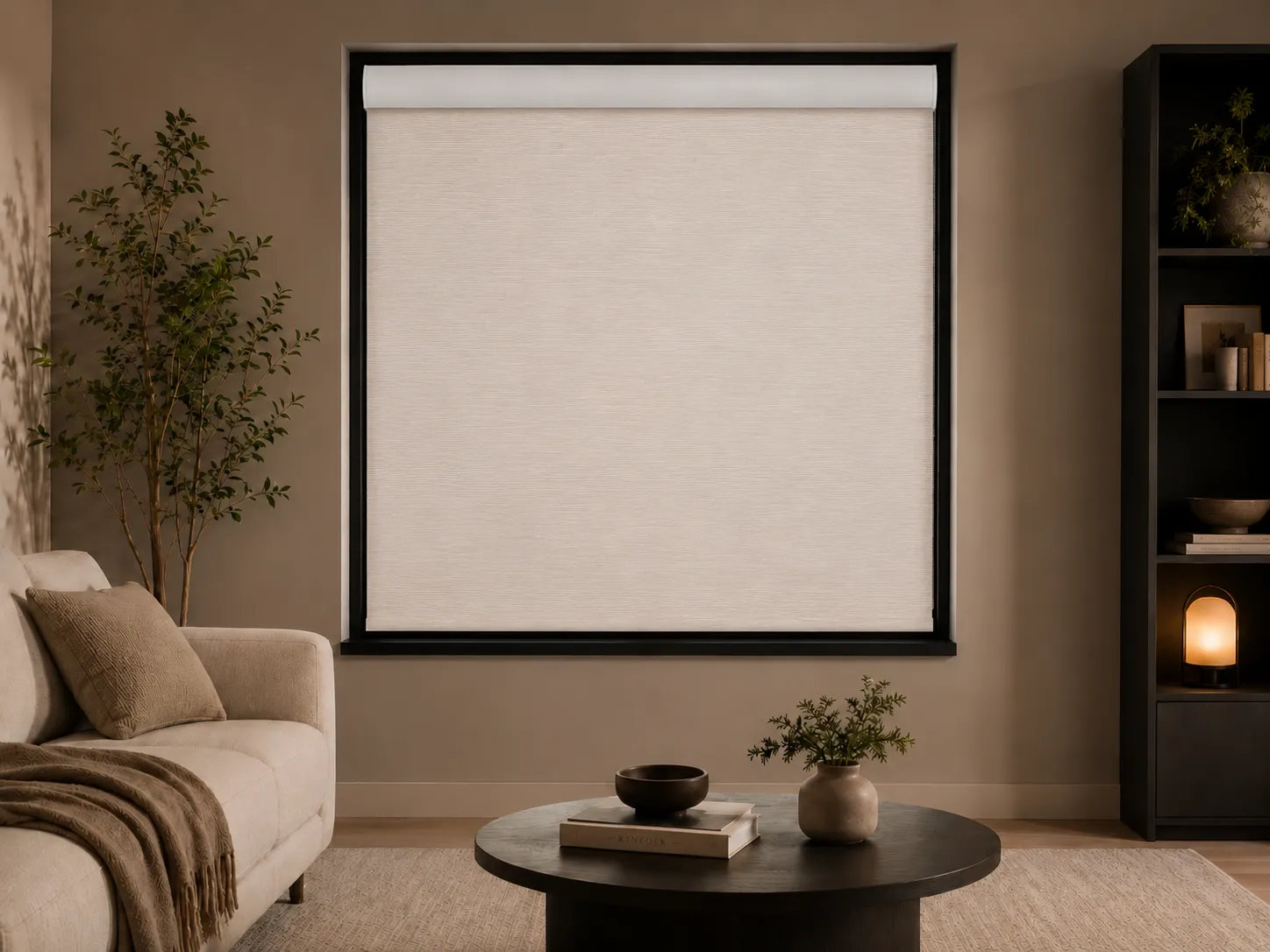
Do you actually need your landlord’s permission?
It depends on what “installing blinds” means in practice. Swapping out flimsy dollar-store blinds for better ones inside the same brackets, or adding tension-mounted shades that grip the window frame, doesn’t touch the wall or the window casing. Most leases don’t say anything about this, because there’s nothing to say anything about. Drilling new holes for brackets is a different matter. Standard residential leases in both provinces include a clause requiring the tenant not to make structural changes without consent. Window casings, while not structural in the load-bearing sense, are still part of the unit the landlord owns.
The practical move is to read the lease first, then email the landlord or property manager a specific, low-risk request: which product, how many screw holes, and an offer to patch and repaint on move-out. Landlords who refuse a request like that are rare, because custom blinds are widely seen as an upgrade to the unit, not damage to it. Get the yes in writing — a text message counts — so there’s no dispute later about what was actually agreed to.
The deposit myth: why Ontario and Quebec renters have less to lose
A lot of the hesitation around installing anything in a rental comes from assuming a damage deposit is on the line. In Ontario and Quebec, that assumption is usually wrong.
Under Ontario’s Residential Tenancies Act, a landlord can collect exactly two things at move-in: a last month’s rent deposit equal to one month’s rent, and a key deposit capped at the actual replacement cost of the keys. Ontario law does not permit a separate security deposit, damage deposit, pet deposit, or cleaning fee — and the last month’s rent deposit can only ever be applied to the tenant’s final month of rent, not to repairs. Landlords who want compensation for damage beyond normal wear and tear have to get the tenant’s written consent to deduct it, or apply to the Landlord and Tenant Board. They can’t simply keep money that was never collected as a damage fund to begin with. That deposit also earns annual interest at the province’s rent increase guideline rate, which is 2.1% for 2026.
Quebec goes further. The Government of Quebec is explicit that landlords have no legal right to demand a security deposit at all, in any amount and for any stated reason. The only payment a landlord can require in advance is the first month’s rent. A tenant asked for a “damage deposit” in Montréal can simply decline, and if a landlord withholds a lease over the refusal, that’s a matter for the Tribunal administratif du logement, not a reason to pay up.
None of this means damage is free. A landlord can still pursue actual repair costs through the Landlord and Tenant Board or the Tribunal administratif du logement, and unresolved bills can follow a tenant through collections or a credit report. But the specific fear that drives most renters to avoid touching their windows at all — “they’ll just keep my deposit” — isn’t how either province’s law works.
What actually happens if you damage the wall anyway
Say a bracket pulls out of drywall, or a screw hole doesn’t patch cleanly. The standard obligation is to return the unit to substantially the same condition it was in at move-in, ordinary wear and tear excepted. A few small, filled and painted screw holes from a reasonable installation generally fall on the wear-and-tear side of that line, the same way picture-hanging holes do. A landlord who wants to charge for something bigger than that — a cracked window casing, drywall torn out around a heavy bracket — needs to show the actual cost. A tenant can dispute the amount at the LTB or TAL rather than simply accepting whatever figure is quoted.
The lowest-risk approach is to keep the original hardware. Most tenants who install their own blinds set the stock brackets and screws aside in a labelled bag, then reinstall them in ten minutes at move-out. This one habit resolves the majority of end-of-lease disputes about window coverings before they start.
Renter-friendly blinds: no-drill and low-damage mounting options
Renters aren’t limited to whatever came with the unit. A few mounting approaches genuinely hold up day to day rather than sagging within a month:
- Tension-mounted brackets that clamp inside the window frame using spring pressure — no screws, no adhesive, and they come out clean.
- 3M-style adhesive brackets rated for the actual weight of the blind (light-filtering roller shades are far lighter than a cellular or motorized unit, so weight rating matters more than the brand name on the strip).
- Magnetic mounts for metal window frames or door tracks, common in some older Ottawa apartment buildings.
- A single small screw per bracket, in the existing pilot hole if the previous tenant’s blinds left one — this is the option that needs a landlord’s yes first.
Inside-mount installs, where the headrail sits inside the window casing rather than on the wall above it, tend to be the renter-friendliest of all. There’s no wall contact, just brackets inside a recess that’s typically deep enough for a roller or zebra blind to sit flush. That’s a different calculation from a heavier cellular blind, which insulates better but adds weight the bracket has to hold — worth flagging during a measurement visit rather than discovering after the fact.
Wall material matters as much as the mounting hardware itself. A lot of the older rental stock in the Glebe, Sandy Hill, and Centretown was built with plaster-and-lath walls rather than drywall, and the Plateau-Mont-Royal has plenty of the same. Plaster doesn’t hold a screw the way drywall does — it tends to crack outward from the hole under load, which turns one small screw into a visibly larger patch job. In any building built before roughly the 1960s, tension or magnetic mounts aren’t just the reversible choice, they’re usually the more reliable one too, since a plaster wall can fail under a loaded bracket long before a drywall one would.
Cordless and safety considerations still apply in a rental
Health Canada’s corded window covering rules didn’t carve out an exception for tenants. The same safety logic that applies to a homeowner’s blinds applies to a rental with kids or pets visiting. Cordless lift systems have become the standard recommendation across the industry, not an upsell, for exactly this reason. Our cordless blinds safety guide covers what Health Canada actually requires and which products meet it, and it’s worth a read before choosing a rental-friendly style. Cordless options also happen to suit rentals well for an unrelated reason: without a cord to catch on furniture during a move, they come down and go back up with less risk of damage to the mechanism.
Mounting options compared
Here’s how the main renter-friendly approaches stack up against each other:
| Mounting method | Wall/frame damage | Reversible at move-out | Best suited for |
|---|---|---|---|
| Tension/spring bracket | None | Yes, instantly | Roller or zebra blinds in a standard window recess |
| Weight-rated adhesive bracket | None if removed correctly | Yes, with adhesive remover | Lighter fabrics, short-term leases |
| Magnetic mount | None | Yes, instantly | Metal frames, some older apartment buildings |
| Single screw in existing hole | Minimal, already present | Yes, reinstall original hardware | Units with prior blinds installed |
| New screws into casing | Small, patchable holes | Only with landlord’s written consent | Longer leases, heavier cellular or motorized units |
A one-year lease, worked through
Take a fairly ordinary case: a one-bedroom in a low-rise near Little Italy, a standard one-year lease, and bare windows the previous tenant left behind. The lease has the usual clause barring “structural alterations” without consent but says nothing about window coverings specifically. Two windows face a busy street with streetlight glare at night; a third is a smaller bathroom window that just needs privacy.
The street-facing windows are standard sizes, so a tension-mounted, cordless roller blind in an inside-mount configuration goes up without touching the wall. The tenant emails the property manager as a courtesy, not to ask permission, since nothing is being altered. The bathroom window is narrower and gets a magnetic mount, since the frame there happens to be metal. Total time from measuring to hanging is an afternoon, and none of it requires a screwdriver. At move-out the same blinds either come with the tenant to the next place or come down clean, with the original stock blinds — kept in a closet all year — going back up in their place. Nothing here touches the last month’s rent deposit, because nothing was ever filed against it.
When it’s worth calling a professional, even as a renter
A tension-mounted roller shade is a reasonable DIY project. A motorized cellular blind, or any install where the window is an odd size, a bay, or a sliding door, is where a measurement mistake gets expensive fast. It’s also where a hole drilled in the wrong spot is the kind of damage that’s harder to write off as wear and tear. Zenith Shade measures and installs for renters the same way we do for homeowners, and we’ll flag up front which mounting approach fits a given lease and window rather than defaulting to whatever’s easiest to sell. Our measuring guide is a useful starting point if you want to get a sense of the numbers before booking anything, and Montréal tenants get the same visit in French through our Quebec service area.
Custom roller, zebra, and cellular blinds all come in inside-mount configurations built for exactly this kind of low-impact install. Motorized options are available cordless from the factory rather than retrofitted — worth asking about directly if a lease is long enough to justify the upgrade.
Frequently asked questions
Can my landlord refuse to let me install blinds at all?
Yes, if the request involves drilling or attaching anything permanently — a lease can require consent for that, and a landlord can say no. A landlord generally can’t object to no-drill options like tension or magnetic mounts, since those don’t alter the unit.
Do I need permission to remove the blinds that were already there?
Keep them. Set the originals aside somewhere safe rather than discarding them, and reinstall at move-out — that one habit avoids most disputes about what condition the window covering has to be returned in.
Will installing blinds affect my last month’s rent deposit in Ontario?
Not directly. That deposit legally has to go toward your final month’s rent, not repairs, so a landlord can’t dip into it for a patched screw hole without your written consent or an LTB order.
I’m in Montréal — does any of this apply the same way under Quebec law?
The deposit protections are actually stronger in Quebec, since security deposits are prohibited outright rather than capped. The general expectation to return the unit in reasonable condition still applies, and it’s enforced through the Tribunal administratif du logement rather than Ontario’s LTB.
What’s the safest option if I don’t want to deal with any of this?
A tension-mounted, cordless roller or zebra blind sized for an inside mount — about as close as it gets to the archetype of renter-friendly blinds. No screws, no landlord conversation required, and it comes down clean on moving day.
Getting it right the first time
Renting doesn’t have to mean living with whatever blinds were already on the window, or waiting until you own a place to get something that actually fits and functions. Between the mounting options that need no permission and the deposit rules that limit what’s actually at stake if something does go wrong, most tenants in Ottawa and Montréal have more room to upgrade their windows than they think. Request a free quote or get in touch to book an in-home measurement — we’ll tell you straight which mounting approach suits your lease before anything gets ordered.