Official sources verified on October 24, 2026
Thermal blinds are window coverings built to slow heat loss through glass, and the type with the strongest independent test data is the cellular (honeycomb) shade. In a U.S. Department of Energy field test and model, cellular shades cut heating energy by up to 20% and combined heating and cooling energy by up to 15% compared with no shades. They help most when they fit the frame closely and are closed at night, but they do not stop drafts or replace a failing window.
Results depend on how the shade is built, how tightly it fits and how you use it, so the sections below explain what to look for before you buy, using public test data rather than product claims.
Thermal blinds at a glance
| Question | Short answer |
|---|---|
| What counts as a thermal blind? | A retail label, not a certification. In practice it means a covering that traps a layer of still air against the glass: cellular shades first, then lined or dense roller fabrics. |
| Do thermal blinds work? | Yes, within limits. Tested cellular shades reduced heating energy by up to 20% (DOE, 2021). Ordinary blinds and curtains help less because they are not airtight. |
| Best type for a Canadian winter | A cellular shade, mounted inside the frame with small side gaps, or outside the frame with generous overlap. |
| Thermal vs blackout | Different jobs. Blackout blocks light; insulation comes from air pockets and fit. A room-darkening cellular shade does both. |
| Biggest limitation | They do not seal the window. Air leaks around the frame need caulking or weatherstripping, and warm moist air behind a closed shade can still condense on cold glass. |
| Is there an energy rating? | Some products carry an AERC label with separate Cool Climate and Warm Climate ratings. Any rating above zero saves energy compared with a bare window. |
Why windows are the weak point in winter
Windows lose heat far faster than the walls around them, which is why a covering on the glass can make a measurable difference. Natural Resources Canada says windows, doors and skylights can account for up to 35% of total house heat loss, and that single-glazed windows lose about 10 to 20 times as much heat as the same area of properly insulated wall.
The U.S. Department of Energy puts the imbalance another way. In its 2023 article on cellular shades, it notes that windows make up about 10% of a typical home’s surface area but can account for 30% to 40% of its heat loss in winter. Divide one by the other and each square foot of window is losing roughly three to four times its share of the home’s heat.
Heat leaves through glass in three ways: conduction through the glass and frame, air leaking around the sash, and radiation from the warm room toward the cold pane. A thermal blind mainly works on the first and third. It puts a layer of fabric and still air between the room and the glass, so the room side stays warmer and less heat radiates out. It does very little about air leaking through gaps in the frame, which is why NRCan recommends caulking and weatherstripping as separate jobs.
Do thermal blinds actually work? What the test data shows
The best evidence comes from cellular shades, because that is what government labs have tested. Results vary with climate, glazing and how the shades were operated, so treat each figure as a result under specific conditions rather than a promise.
| Source | Test setting | Result | Compared with |
|---|---|---|---|
| U.S. DOE fact sheet DOE/EE-2519 (Oct. 2021) | Test home in Knoxville, Tennessee, Dec. 2019 to May 2020, plus a model of a 2,380 sq. ft. home in 15 climate zones | Up to 20% less heating energy; up to 15% less total heating and cooling energy | No shades |
| PNNL Lab Homes report PNNL-24857 (2015) | Two matched 1,500 sq. ft. homes in Richland, Washington, thermostat at 71°F (about 21.7°C), short heating-season test | HVAC energy reduced by 17.6% ± 8.1% with shades operated for best performance | Matched baseline home |
| U.S. DOE article (Apr. 2023) | Summary of earlier national-lab research | Heating energy needs reduced by almost 25% | Not specified in summary |
Three details matter more than the headline percentages. First, the DOE fact sheet says its experiments focused on the heating season, so the cooling-season benefit is less well established. Second, the PNNL team tested a multi-layer opaque honeycomb shade over double-pane, aluminum-frame windows rated at a U-factor of 0.68 Btu/h·ft²·°F, about 3.9 W/m²·K. NRCan says better double-glazed windows reach 1.2 W/m²·K or lower, and a better-insulated window leaves less heat for a shade to save. Third, the PNNL figure came from shades operated deliberately: closed when the glass was cold and opened when the sun could add heat.
NRCan is more cautious about ordinary coverings. It says curtains and blinds can help reduce radiant heat loss in the heating season, that insulated drapes offer somewhat more benefit than non-insulated drapes and blinds, and that because curtains and blinds are not airtight, they may cause condensation problems in winter. That is a fair summary of where the limits are.
Which thermal blinds insulate best: types compared
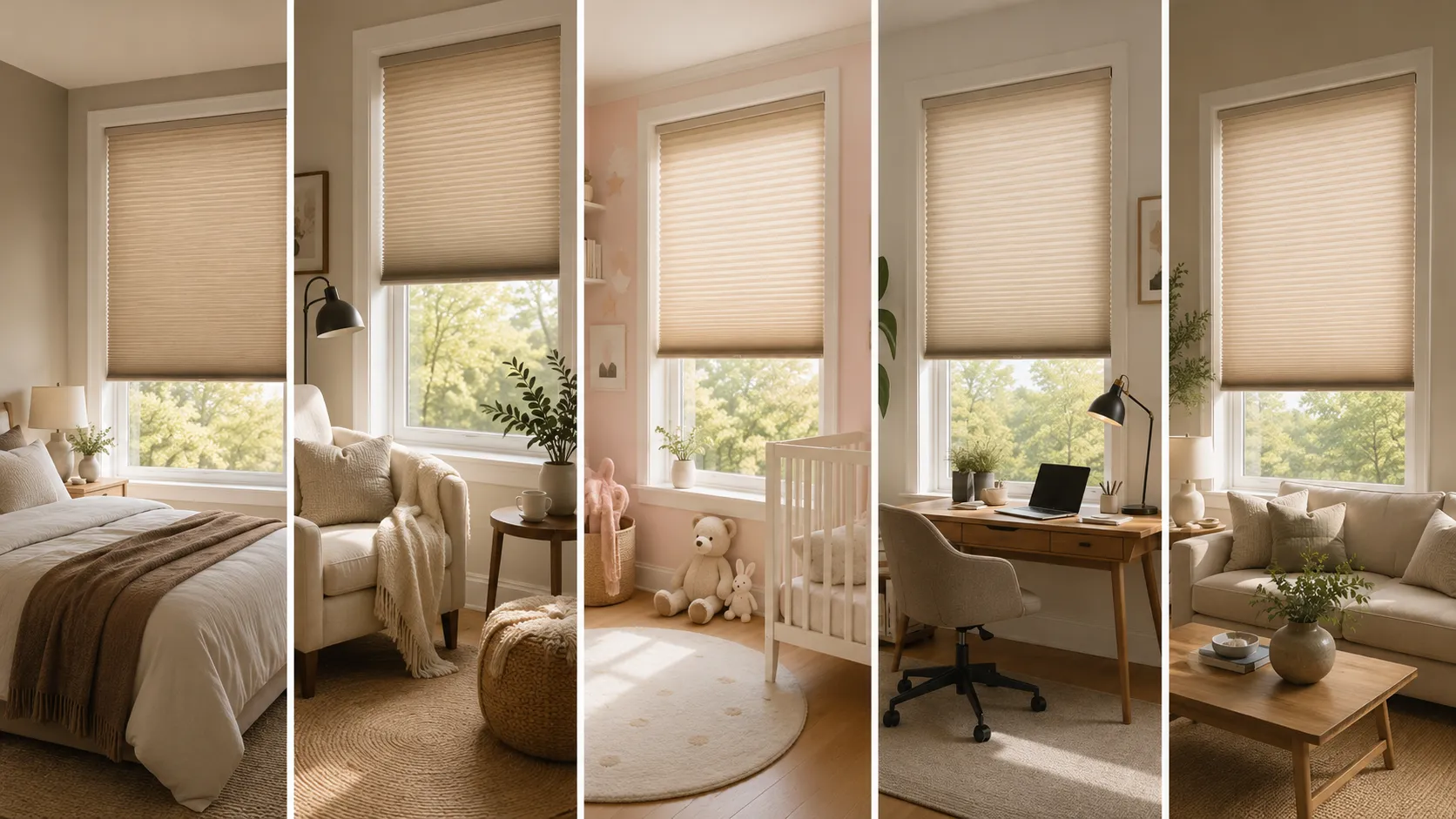
Cellular shades insulate best because their structure is the insulation. Flat fabrics can add some value, especially room-darkening or layered ones, but they rely on fit more than construction. The comparison below covers the coverings Canadian buyers usually weigh against each other.
| Covering | How it slows heat loss | Strengths | Watch for |
|---|---|---|---|
| Cellular (honeycomb) shade | Pleated cells trap pockets of still air across the whole window | Most independent test data; light filtering or room-darkening fabrics; compact headrail | Fit at the sides; dust in cells; choose cordless or motorized in children’s rooms |
| Room-darkening roller shade | A dense single fabric plane reduces radiation to the glass | Clean look; works on large windows; can be paired in a dual roller system | Side gaps on inside mounts; less trapped air than a cellular shade |
| Zebra (dual-layer) shade | Two fabric layers overlap when closed | Privacy and light control in one product | Light-filtering by design, so the bands never fully seal; best treated as a modest thermal layer |
| Lined or insulated drapes | Thick fabric and lining, often mounted wide of the frame | NRCan notes insulated drapes do a little better than non-insulated drapes and blinds | Air flows over the top and around the sides unless the drape is closed tight to the wall |
| Slatted blinds (vinyl, aluminum, wood) | Slats block some radiation when closed | Inexpensive and adjustable | Gaps between slats; used as the comparison product in the DOE and PNNL tests |
Zenith Shade makes roller, zebra and cellular blinds, all custom-sized and all available with motorization. For a window where winter comfort is the main goal, our recommendation is the cellular blind. For a bright living room where privacy and daylight matter more, a zebra blind or a room-darkening roller blind can still add a modest layer, as long as you size it to cover the glass well. You can compare all three on our custom blinds page.
Single-cell vs double-cell fabrics
Cellular fabrics are sold with one row of cells or two stacked rows. More layers of trapped air generally means more resistance to heat flow, and the shades in the PNNL test, for example, were a multi-layer design. Ask to see the cell structure on a sample, and ask whether the specific fabric has been rated, instead of relying on the word “thermal” in a product name.
Thermal blinds vs blackout blinds: not the same thing
A blackout blind and a thermal blind solve different problems, and one does not guarantee the other. Blackout is about light: a coating or opaque layer stops daylight passing through the fabric. Thermal performance is about air: how much still air the covering holds against the glass and how much room air can slip around its edges.
A blackout roller shade with wide side gaps will darken a bedroom well enough for sleep yet still let cold air spill out around its edges. A light-filtering cellular shade with a close fit can hold more warmth and still let soft light through. If you want both, a room-darkening cellular shade covers both jobs. Our guide to room darkening vs blackout blinds explains how much light each one lets in around the edges.
Fit matters as much as fabric
The air layer only works if room air cannot circulate freely behind the shade. When warm air from the room slides down the side gap, cools against the glass and drops out the bottom, the shade is doing far less than its fabric could. This is the main reason two homes with the same product report different results.
| Mounting choice | Thermal effect | When to choose it |
|---|---|---|
| Inside mount (within the frame) | Closes off the window recess; small side gaps remain, so fit precision matters | Deep enough flat frame for the hardware; you want a built-in look |
| Outside mount (on the wall or trim) | Overlap on each side and above the frame cuts the path for air around the edges | Shallow frames, uneven openings, or when insulation is the top priority |
| Closed at night, open on sunny days | Keeps the air layer in place when the glass is coldest and lets solar heat in when available | Every window; easiest with motorized schedules |
Our window shade measuring guide gives the planning numbers we use: a cellular headrail needs about 2 to 2 1/2 inches of flat mounting depth for an inside mount, and many rooms benefit from 1.5 to 3 inches of overlap on each side for an outside mount. For more on the trade-offs, see inside mount vs outside mount blinds.
Worked example: sizing an outside-mount thermal blind
Say a bedroom window opening measures 36 inches wide and the frame is too shallow for a cellular headrail. Using the 1.5 to 3 inch overlap range on each side, the finished blind width falls between 39 inches (36 + 1.5 + 1.5) and 42 inches (36 + 3 + 3).
| Step | Measurement | Result |
|---|---|---|
| Opening width (narrowest of top, middle, bottom) | 36 in | 36 in |
| Minimum overlap, 1.5 in each side | 36 + (2 × 1.5) | 39 in finished width |
| Generous overlap, 3 in each side | 36 + (2 × 3) | 42 in finished width |
| Check clearances | Trim projection, nearby walls, handles, cranks | Adjust overlap if anything interferes |
For a window where heat loss is the main complaint, lean toward the wider overlap if the wall space allows it. Record every measurement to the nearest 1/16 inch, and note anything near the window that the bottom rail could hit.
How to read an energy rating for thermal blinds
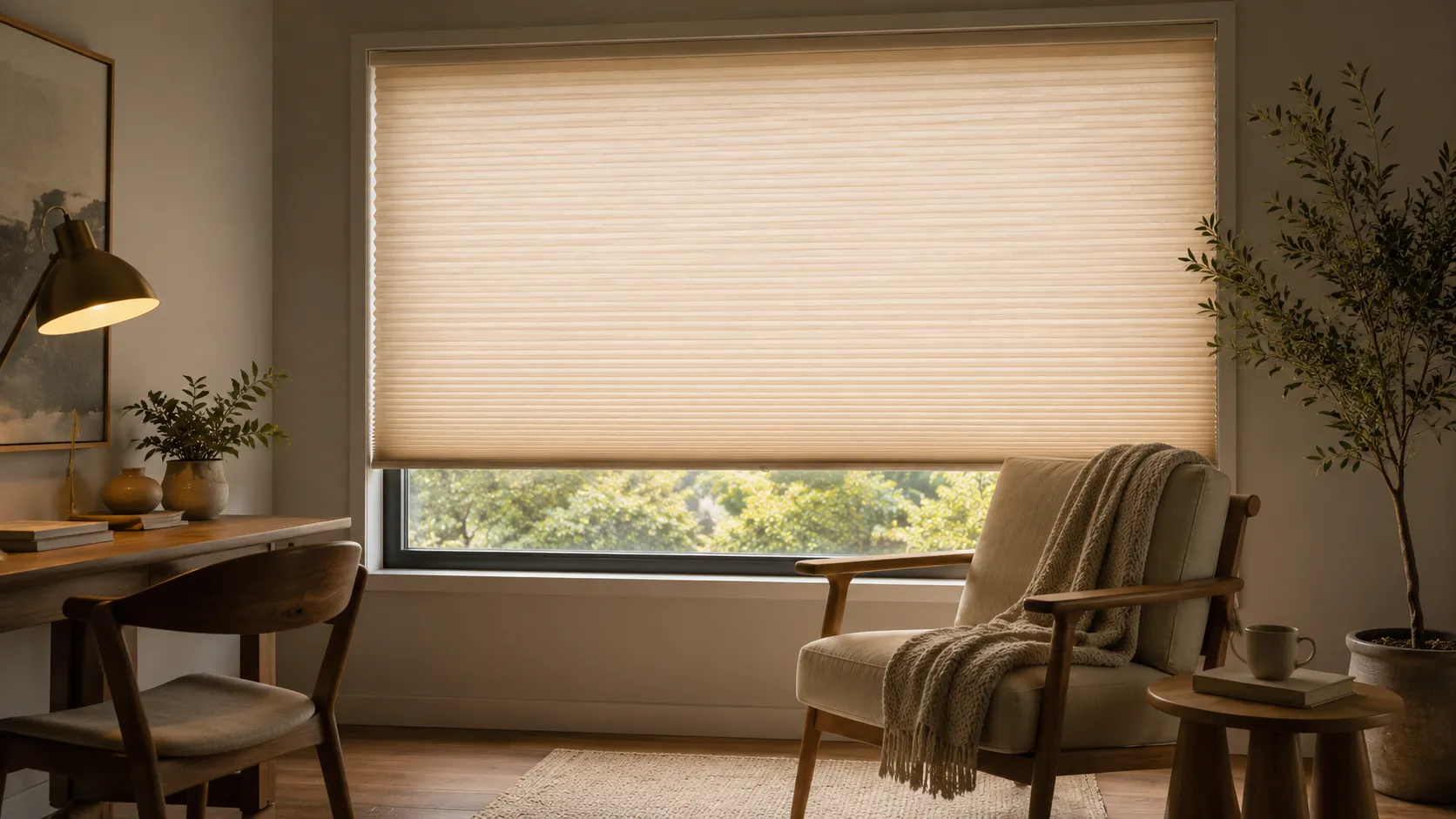
Most “thermal” claims are not backed by a rating, but some products are. The Attachments Energy Rating Council (AERC) is an independent non-profit that rates window attachments, including blinds, cellular shades and roller shades. It was set up through U.S. DOE funding awarded to the Window Coverings Manufacturers Association. The AERC is a U.S. program, so not every product sold in Canada carries its label; ask for it, and treat its absence as unknown rather than as a poor result.
| Label item | What it tells you | How to use it in Canada |
|---|---|---|
| Cool Climate rating | Potential energy savings when it is cold outside and the heating is running | The number that matters most for an Ottawa or Montréal winter; higher is better |
| Warm Climate rating | Potential savings when it is hot outside and air conditioning is running | Useful for west- and south-facing rooms that overheat in summer |
| Any rating above 0.00 | The product saves energy compared with no window attachment | A rated product beats an unrated claim |
| Max improvement for the category | The highest rating that type of product can reach | In a cool climate, AERC lists 15 for blinds and 110 for storm windows, which shows why fixing the window comes first |
For a real-world threshold, when Minnesota added cellular shades to its list of effective energy-saving techniques in 2023, the DOE reported that the qualifying shades were AERC-certified with a Warm Climate rating of at least 36 and a Cool Climate rating of at least 9. You can read how the ratings are built on the AERC label guide.
Getting the most from thermal blinds: a winter routine
Operation changes results. The PNNL team measured its best numbers with shades used deliberately, and the DOE fact sheet says control strategies still need more research. Until then, a simple routine covers the basics.
- Lower shades at dusk on every window, especially north-facing ones that get no direct sun.
- Raise south-facing shades on clear winter days so the sun can warm the room, then lower them before the glass cools in the late afternoon.
- Keep shades closed in rooms you are not heating much, such as spare bedrooms.
- Leave a small gap at the bottom or open shades for part of the day if you see heavy condensation on the glass; moisture needs somewhere to go.
- Keep indoor humidity under control with bathroom and kitchen fans, since a tight covering over cold glass can make condensation more visible.
Motorization makes this routine easy to keep. A motorized cellular blind can follow a schedule, so the shades close at sunset whether or not anyone is home. Motorized and cordless controls also remove reachable cords in bedrooms and nurseries; Canada’s Corded Window Coverings Regulations (SOR/2019-97) have limited reachable cords to 22 cm and loops to 44 cm under a 35 N pull since May 1, 2021. Our cordless blinds safety guide covers the rules in detail.
Thermal blinds and condensation
A close-fitting thermal blind keeps room heat away from the glass, which also means the glass gets colder. If the room air is humid and some of it seeps behind the shade, it can condense on that cold pane. NRCan names this directly: because curtains and blinds are not airtight, they may cause window condensation in winter.
This does not make thermal blinds a bad choice. It means humidity and ventilation need attention alongside them. NRCan’s fixes are to reduce indoor humidity, improve ventilation, or raise the surface temperature of the glass with more efficient windows. Our guide on whether blinds cause window condensation includes a seven-day troubleshooting plan.
When thermal blinds are not the right fix
Thermal blinds improve a sound window. They cannot rescue a failing one. Before spending on coverings, check the window itself against these signs:
- You can feel a draft at the frame or sash with the shade open. That is air leakage, and NRCan recommends caulking around the trim and weatherstripping moving parts.
- Fog or moisture sits between the panes of a sealed unit. NRCan says a broken seal is best fixed by replacing the glazing unit.
- The window is single-glazed. NRCan says storm windows or double-glazed sealed units reduce heat loss by almost half, a larger gain than any covering.
- Frost builds on the inside of the glass every cold night, even with the shade open. Start with humidity and ventilation.
If your windows are sound and your rooms still feel cold near the glass, thermal blinds are a reasonable next step. If you are weighing coverings against a rebate-funded upgrade, see our article on energy efficient blinds and Canadian rebates.
Common mistakes when buying thermal blinds
- Buying on the word “thermal” alone. Ask for the cell structure, the fabric opacity and any AERC rating.
- Choosing an inside mount on a shallow frame. If the headrail does not have enough flat depth, an outside mount with overlap will perform better.
- Undersizing an outside mount. A blind cut to the glass size leaves the frame edges open to air movement.
- Leaving every shade open on a cloudy, windy day. On north-facing windows the glass gives back little or no solar heat.
- Expecting a shade to cure drafts or condensation. Both start with the window and the air in the room.
- Choosing different fabrics room by room without a plan. On large or repeated windows, keep the fabric and rail heights consistent so the house reads as one system; see blinds for large windows for splitting wide openings.
Choosing thermal blinds for each room
| Room | Main need | Suggested thermal option |
|---|---|---|
| Bedroom | Warmth at night, darkness for sleep | Room-darkening cellular blind, cordless or motorized |
| Nursery or child’s room | Warmth, darkness, no reachable cords | Cordless or motorized cellular blind |
| Living room | Daylight, privacy, some warmth | Light-filtering cellular blind, or zebra blind sized with overlap |
| Basement | Cold glass, shallow frames | Outside-mount cellular or roller blind; see blinds for basement windows |
| Patio or sliding door | Large cold glass area, frequent use | Cellular or roller blind planned around door travel; see blinds for sliding glass doors |
| Home office | Glare control with some insulation | Light-filtering cellular blind or room-darkening roller blind |
Comparing coverings more broadly? Our blinds vs curtains guide looks at warmth, light and cleaning side by side.
See and feel the fabric first
Cell structure and opacity are easier to judge in your hand than on a screen. Request a free sample of our cellular, roller or zebra fabrics, or request a quote with your window sizes and we will recommend a mount and fabric for each room.
Frequently asked questions about thermal blinds
Do thermal blinds really keep heat in?
Yes, when they fit well and are closed at night. In a U.S. DOE test and model, cellular shades cut heating energy by up to 20% compared with no shades. They do not stop air leaks around the frame.
What is the difference between thermal blinds and insulated blinds?
In everyday use, nothing: both are retail names for coverings that trap air against the glass. The meaningful difference is between products with a published rating, such as an AERC label, and products without one.
Are blackout blinds the same as thermal blinds?
No. Blackout describes how much light the fabric blocks, while insulation depends on trapped air and fit. A room-darkening cellular shade offers both.
Which type of thermal blinds is best for Canadian winters?
Cellular (honeycomb) shades, because their cells hold still air across the whole window and they have the most independent test data. Mount them with small side gaps or generous outside overlap.
Can thermal blinds cause condensation?
They can make it more likely. NRCan notes that blinds and curtains are not airtight and may cause condensation in winter, so control indoor humidity and open the shades for part of the day.
Should I keep thermal blinds closed all day in winter?
Not on sunny south-facing windows. Open them while the sun is on the glass to gain free heat, and close them before the glass cools in the late afternoon. Keep north-facing shades closed more often.
Do thermal blinds qualify for a rebate in Canada?
It depends on the program, and the rules change. Check current federal, provincial and utility programs before you buy; our rebate article explains where window coverings stood when it was written.
The bottom line on thermal blinds
Thermal blinds are worth buying when your windows are sound but the glass still makes rooms feel cold. Choose a cellular shade for the best insulation, size it to limit air movement around the edges, close it at night and open sunny windows by day. Fix drafts, broken seals and high humidity first, because no covering can do that work for you. When you are ready, request a quote or book a free consultation and we will review each window with you.
Scope: this guide covers interior window coverings for homes. Test results come from U.S. and Canadian government and national-lab sources listed above and were measured under specific conditions; savings in your home will vary. Nothing here is a guarantee of energy savings.